
Revolutionising Security: The Emergence of Fingerprint Access Control Systems
As the world becomes increasingly digitised, the necessity for advanced security measures grows. Among these innovations, the fingerprint access control system stands out for its unique benefits in safeguarding sensitive environments. This cutting-edge technology leverages the uniqueness of human fingerprints to facilitate secure, efficient, and user-friendly access control in various settings.
The Rise of Biometric Technology
Biometric technology has seen a significant surge in adoption across multiple sectors over the past decade. The drive towards using biological data to authenticate individuals is primarily driven by the need to enhance security and streamline authentication processes. Fingerprints, with their distinctive and unchangeable patterns, have been at the forefront of biometric applications.
Fingerprint access systems have evolved from simple time-clocking devices to comprehensive security solutions in residential, commercial, and governmental premises. Unlike traditional security methods that rely on PINs or keycards, fingerprints cannot be easily lost or forgotten, reducing potential security breaches.
How Fingerprint Access Control Systems Work
At the core, fingerprint access control systems work by capturing and storing the unique patterns of ridges and valleys found on individual fingerprints. When a person attempts to gain access, the system captures a real-time image of their fingerprint and compares it to the stored templates in the database.
The system’s accuracy depends significantly on the sensors used. Optical sensors, which capture images of the fingerprint using light, and capacitive sensors, which detect the fingerprint’s electrical charge, are prevalent. Both types have their pros and cons, but both aim to accurately and efficiently identify users.
Benefits Over Traditional Systems
One major advantage of fingerprint systems is their high level of security. Because every fingerprint is unique, the likelihood of two people having identical fingerprints is practically zero. This uniqueness effectively eliminates typical risks associated with traditional access methods, like lost keys or stolen access cards.
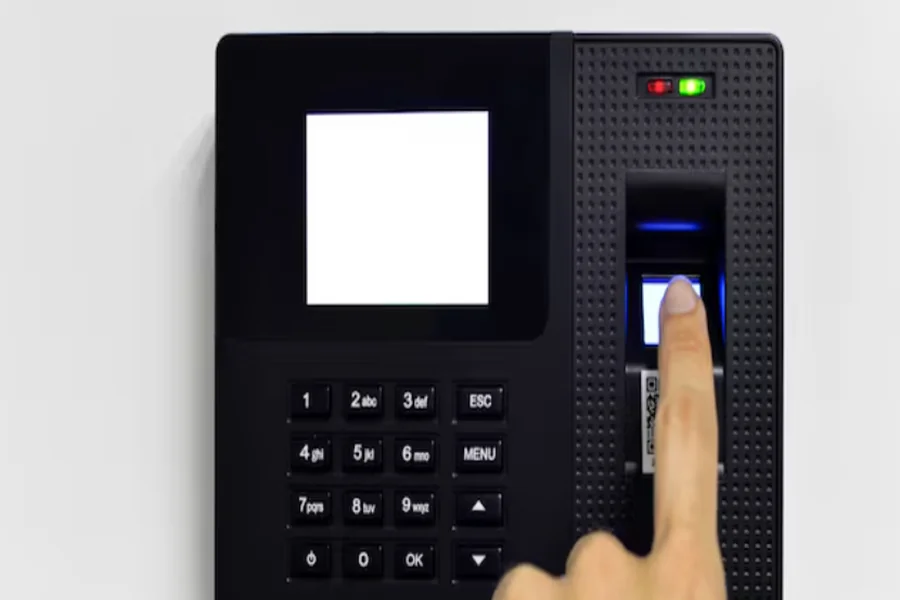
Another benefit is convenience. Users do not need to carry additional access items, which can be particularly beneficial in environments where security personnel must maintain unrestricted movement, such as laboratories or transportation hubs.
The reduction of administrative overhead is another significant advantage. Without the need to manage physical keys or cards, organisations can streamline their access management, reduce costs, and lower the risk of corruption from manual handling errors.
Applications Across Industries
Corporate Sector
In corporate offices, these systems not only manage employee access control but also offer insights into employee attendance and movement within a facility. They ensure that only authorised personnel have access to specific areas, enhancing overall security.
Education
Schools and universities utilise fingerprint systems to control access to buildings and sensitive areas like labs. This application not only keeps students safe but also secures valuable equipment.
Healthcare
Hospitals and clinics adopt biometric access controls to protect sensitive patient data and regulate entry into restricted areas. By replacing keys or badges with fingerprint identification, healthcare providers can better ensure patient privacy and comply with stringent regulatory requirements.
Residential Properties
Fingerprints are increasingly used in residential security, offering homeowners advanced protection. Smart locks with fingerprint sensors provide an easy yet secure way to control access without the hassle of keys.
Challenges and Considerations
Despite their advantages, fingerprint systems are not without challenges. One key issue is the false rejection rate (FRR), where legitimate users are denied access. This can occur due to dirty or damaged fingers or poor sensor quality. Conversely, the false acceptance rate (FAR) indicates occurrences where unauthorised users gain entry, although this is rare with advanced systems.
Another concern is the potential for data privacy breaches. Storing biometric data carries inherent risks if not handled correctly. It is crucial for organisations to encrypt biometric data and comply with data protection regulations to mitigate these risks.
Additionally, environmental conditions, such as extremely hot or cold climates, can affect sensor performance and reliability, necessitating robust technology that can withstand various conditions.
The Future of Fingerprint Access Control
As technology advances, the fingerprint access control system is set to become even more sophisticated. Future developments may see integration with artificial intelligence to predict and prevent potential security threats. Multi-modal biometric systems that combine fingerprints with other biometric data like iris scans or facial recognition could enhance accuracy and security.
Adoption rates are likely to increase as technology costs decrease, making biometric systems accessible for smaller businesses and individual consumers. In addition, ongoing improvements in sensor technology and data protection measures will further solidify fingerprint access systems as a staple in modern security infrastructure.
The journey towards integrating biometric systems into everyday life is well underway. As the landscape of security technology transforms, the fingerprint access control system will undoubtedly play a pivotal role in defining a secure, efficient, and user-friendly future.