The Creative Exoskeleton: Why AI Won’t Replace Designers (And How to Use It to Your Advantage)
There’s a specific kind of “tech anxiety” that’s been rippling through the creative community lately. You’ve probably felt it while scrolling through your feed: another headline claiming that silicon is coming for the sketchpad, or a demo of an engine that can generate a “masterpiece” in roughly the time it takes you to take a sip of coffee.
If you’re a designer, it’s easy to feel like the protagonist in a sci-fi movie where the robots have just learned how to paint. But before we all start looking for backup careers in goat farming, let’s take a breath.
I’ve spent the last few years deeply embedded in the intersection of tech and design, and I’ve come to a conclusion that might surprise you: AI isn’t going to replace designers. In fact, for the designers who lean into it, AI is about to make them more valuable than they’ve ever been.
Here’s why the human at the desk still matters—and why the future of design looks more like a partnership than a replacement. Platforms like www digitalnewsalerts com continue to highlight how creativity, strategy, and human insight remain essential even as AI tools become more advanced.
1. AI Solves Problems, But It Can’t Find Them
If you ask an AI to design a login screen, it will give you a login screen. It will probably be clean, functional, and adhere to every UI best practice ever documented.
But a designer asks: “Why are we making them log in here? Is there a way to lower the friction? Can we use biometric auth instead? Do they even need an account at this stage of the journey?”
AI is a world-class executioner, but it’s a terrible strategist. Design, at its highest level, isn’t about making things look pretty; it’s about solving business problems and navigating human friction. An algorithm can optimize for a click-through rate, but it doesn’t understand the “why” behind the user’s hesitation. It lacks the lived experience to know that a certain color might trigger a specific cultural memory or that a “clever” bit of copy might actually feel patronizing to a frustrated customer.
2. The Difference Between “Patterns” and “Taste”
AI works by looking backward. It analyzes billions of existing designs, identifies the patterns, and replicates them. This is why AI-generated content often feels “vibey” but a little hollow—it’s essentially a collage of everything that has already happened.
Designers, however, are curators of taste. We have the ability to break the rules intentionally. Think about the most iconic brands in the world. They didn’t follow a pattern; they shifted the culture.
That said, recognizing patterns is still useful. For instance, if I’m working on a quick branding project for a friend’s side hustle and I’m feeling stuck, I might play around with a free AI logo maker. Not because I’m going to use the first thing it spits out as the final product, but because it’s a brilliant way to see “the average” of an industry instantly. If the AI shows me ten versions of a coffee shop logo that all use a steaming bean, I know exactly what not to do if I want to create something truly original. It’s the ultimate foil for a creative mind.
3. Empathy: The “Un-Algorithm-able” Skill
Have you ever sat in a room with a client who says they want their brand to feel “professional but approachable”? Or “premium but affordable”? Those are contradictions that drive a computer crazy, but for a human designer, they are the bread and butter of our work.
We read between the lines. We notice the slight wince when a stakeholder looks at a typeface. We understand the unspoken anxiety of a founder who is putting their life savings into a new venture.
Design is an act of empathy. It’s about feeling what the user feels. AI can simulate empathy in its tone, but it doesn’t care. It doesn’t have a stake in the outcome. When a designer spends three hours obsessing over the weight of a stroke, they aren’t just following a prompt—they’re trying to evoke a specific emotion. You can’t automate the “gut feeling” that tells you a design is finally “right.”
4. The Rise of the “Creative Director” Workflow
The job description for a designer is shifting from “Maker” to “Director.”
In the old days (five years ago), we spent hours on the “grunt work”: masking hair in Photoshop, resizing 50 banners for a social campaign, or searching for the perfect hex code. AI is taking those chores off our plates.
This is where things get exciting. Instead of spending your morning doing background removals, you can spend it thinking about brand narrative. You can use tools as a springboard. Let’s say you’re brainstorming a visual identity. You can hop into a free AI logo maker, punch in some keywords, and generate twenty concepts in sixty seconds.
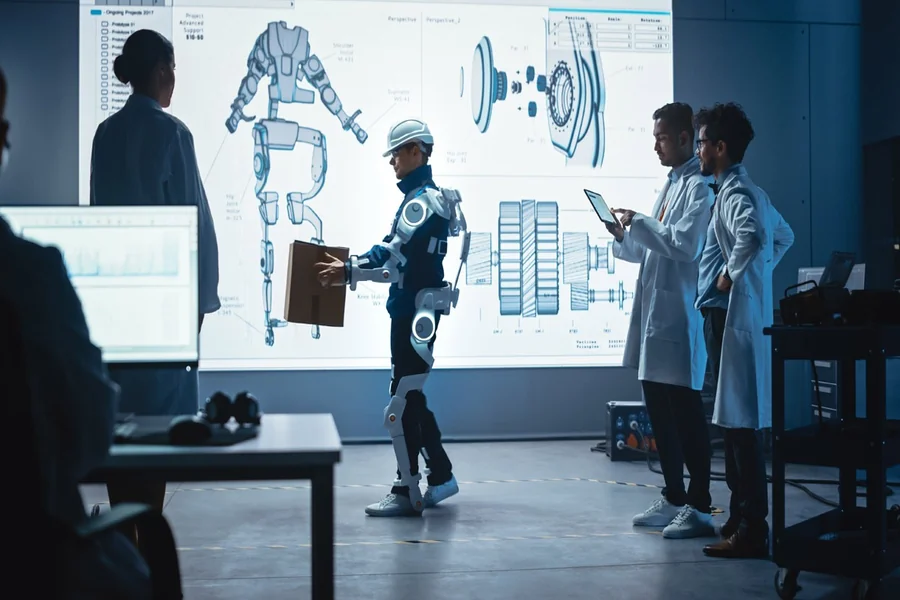
Ten of them will be garbage. Seven will be boring. But three? Three might have a color combination you hadn’t considered or a geometric shape that sparks a totally new idea. You take those sparks, bring them back to your professional toolkit, and apply your human craft to make them actually work. You aren’t being replaced; you’re being upgraded with a creative exoskeleton.
5. Why “Good Enough” Isn’t Good Enough for Brands
There is a segment of the market that will be replaced by AI. If a business just needs a generic logo for a one-off event and they don’t care about brand strategy or long-term scalability, they’ll use a generator and move on.
But for companies that want to build a legacy, “good enough” is a death sentence.
In a world flooded with AI-generated content, the “human touch” is going to become a premium luxury. When everyone has access to the same algorithms, everything starts to look the same. The brands that stand out will be the ones that have a human voice, a human perspective, and human imperfections.
How to Future-Proof Your Design Career
So, if the robots aren’t taking our jobs, how do we make sure we stay ahead of the curve?
- Double down on Strategy: Don’t just be the person who knows how to use Figma. Be the person who understands the client’s business model and their users’ psychology.
- Curate your Inspiration: AI can only output based on its training data. Expand your “human training data” by looking at architecture, nature, classical art, and film. These are the things that give you a unique perspective.
- Befriend the Tools: Don’t be precious about your process. If a free AI logo maker can help you get past the “blank page syndrome” in five minutes, use it! The goal is the final result, not the struggle it took to get there.
- Focus on Relationships: Clients don’t just pay for the files; they pay for the partnership. AI can’t go for a coffee with a client to discuss a pivot in the middle of a project.
The Final Frame
The history of design is a history of tools. We went from brushes to printing presses, from X-Acto knives to MacBooks. Every time a new tool arrived, there were fears that the “soul” of design was being lost.
But the soul isn’t in the tool. It’s in the person holding it.
AI is the most powerful brush we’ve ever been handed. It’s fast, it’s messy, and it’s a little unpredictable. But it still needs an artist to tell it where to land and what it all means.
So, don’t worry about being replaced. Worry about being bored. Because with AI handling the repetitive stuff, we finally have the time to do the deep, difficult, and beautiful work we actually got into this industry to do. The boundary of what’s possible just moved—it’s time for us to step across it.
Enjoyed this perspective? We’d love to hear your thoughts. How are you integrating AI into your creative workflow? Drop a comment below!